
A well-equipped household starts with dependable products for cooking, cleaning, personal care, simple repairs, and everyday comfort. This checklist covers the home essentials worth prioritizing, how to choose versions that fit your space, and what can wait. Whether you are building a Konicamart shopping list or reviewing what you already own, start with useful basics rather than a cart full of gadgets.
What essential products should every modern household have?
Every modern household should have basic cookware, cleaning supplies, bathroom necessities, comfortable bedding, simple hand tools, working safety alarms, and practical lighting. The right quantities depend on how many people live there, how often you cook and clean, and how much storage you have. Treat these categories as a starting point, not a requirement to buy everything at once.
Before shopping, walk through your home and identify the tasks that feel unnecessarily difficult. Perhaps you keep borrowing a screwdriver, have nowhere to hang wet towels, or struggle to store leftovers. Those recurring inconveniences can help you decide what belongs on your list.
Sort potential purchases into three groups:
- Needed now: Items missing from an everyday routine, such as a trash bin, saucepan, or bath towel.
- Useful soon: Products that address a repeated problem, such as a drying rack or drawer organizer.
- Optional upgrades: Specialty appliances, matching accessories, and duplicates without a clear purpose.
Keep functional items you already own. A scratched laundry basket does not need replacing simply because it does not match the bathroom.
Kitchen basics that earn their cupboard space
Start your kitchen list with the meals you actually prepare. For a simple setup, consider a saucepan with a lid, a frying pan, a cutting board, a comfortable kitchen knife, and a mixing bowl. Add a baking tray or larger pot if your regular recipes call for one.
Choose utensils to match those tasks: a spatula for turning food, a spoon for stirring, a colander for draining, and a can opener if you buy canned ingredients. Check cookware care instructions before choosing utensils or cleaning tools. Buy for your current cooking habits before investing in an imagined future routine.
Food storage and everyday serving
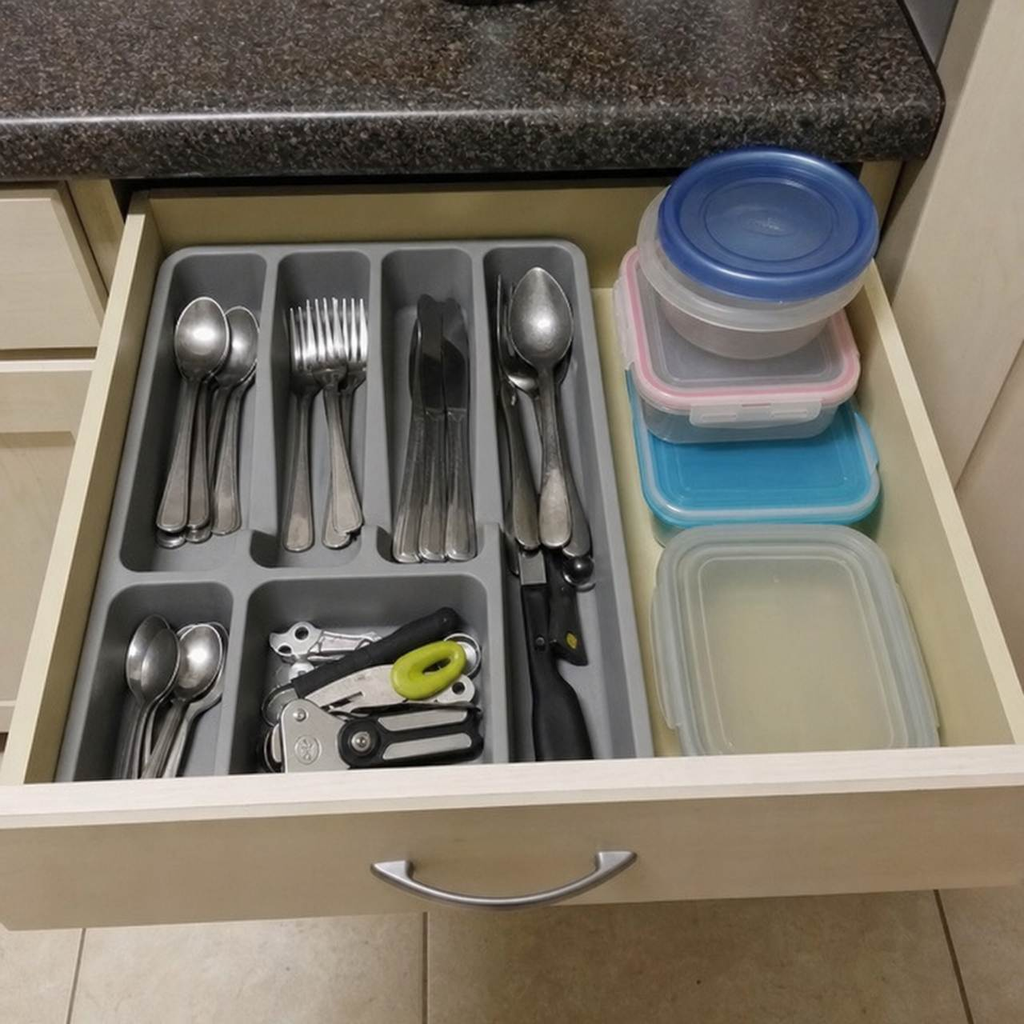
For food storage, choose containers whose size and shape suit your usual leftovers and packed lunches. Check whether the lids are easy to open, whether replacements are available, and whether the containers fit your cupboards. Follow the manufacturer’s instructions for microwave, freezer, and dishwasher use.
For plates, bowls, mugs, and cutlery, begin with enough for the people who live in your home and your normal washing routine. Add guest settings only if you regularly entertain. A small collection that gets used is a sensible starting point.
Keep a few practical kitchen textiles on your list, too: dish towels, oven mitts, and a washable surface protector where needed. Give each one a convenient storage spot so it is available during cooking rather than buried in a drawer.
Essential household cleaning products without the excess
Build your cleaning cupboard around the surfaces in your home, not the number of products on a store shelf. Consider a suitable general-purpose cleaner, dishwashing liquid, laundry detergent, and a toilet cleaner, then add specialist products only where care instructions require them. CDC guidance recommends choosing cleaners appropriate for each surface and following their labels.
Cleaning and disinfecting are different tasks. According to the CDC, regular cleaning removes dirt and most germs, while routine disinfecting is generally unnecessary unless someone in the household is sick or circumstances call for it. Clean surfaces before disinfecting when disinfection is needed.
Build your essential supplies around a manageable working kit:
- Reusable cloths: Assign separate cloths to kitchen, bathroom, and general cleaning tasks.
- Broom and dustpan: Keep them accessible wherever you usually deal with crumbs or tracked-in dirt.
- Mop or vacuum: Choose equipment according to your floor manufacturer’s care guidance.
- Toilet brush and plunger: Give each a designated bathroom storage location.
- Suitable gloves: Follow cleaning-product instructions when selecting and using protective equipment.
Never mix cleaning products. Follow label directions for ventilation, dilution, protective equipment, and storage, and keep chemicals out of children’s and pets’ reach. When using a disinfectant, follow its specified contact time rather than immediately wiping it dry. (cdc.gov)
A workable setup might be a cleaning caddy plus a separate place for floor equipment. Before buying another bottle, check whether an existing product is intended for the job. Your aim is a cupboard you understand and use, not a collection of overlapping formulas.
Bathroom and laundry necessities for daily routines
Bathroom household necessities include toilet paper, hand soap, bath towels, a waste bin, and somewhere to hang damp textiles. Add a shower curtain and liner if your bathroom requires them. Choose quantities that work with your household size and laundry schedule rather than buying a large matching set automatically.
For personal care, make a list of the daily use products each person actually uses. That might include toothpaste, toothbrushes, shampoo, body wash, menstrual products, and shaving supplies. Agree on which products can be shared and which need individual storage before stocking the cupboard.
For laundry, consider these basic home goods:
- A manageable hamper: Choose one you can comfortably carry through your home.
- Laundry detergent: Select a product compatible with your machine and follow its dosing instructions.
- A drying arrangement: Plan space for a rack, line, or other suitable drying method.
- Hangers and garment storage: Match these to the clothes you own and how you put them away.
- An iron or steamer, if needed: Let your wardrobe determine whether either belongs on the list.
Keep one designated place for unopened toiletries and laundry supplies. Check it before shopping, and write down the replacement when you open your last spare. This gives you a replenishment routine without requiring a large stockpile.
Essential home tools for small everyday jobs
Build a modest tool kit around tasks you are comfortable doing. A screwdriver with interchangeable bits, tape measure, claw hammer, adjustable wrench, pliers, and a small level make a reasonable starting list. Add tools when a specific job requires them rather than buying a large kit for its piece count.
Before purchasing, consider the task in detail. Does the screwdriver include the bit your furniture uses? Can you grip the handles comfortably? Is the tape measure easy for you to read? These checks matter more than choosing the most elaborate option.
Store tools in a box or bag with small compartments for loose parts. Keep furniture instructions and spare hardware in labeled bags, identifying which item they belong to. When you disassemble something, take your own reference photos and keep its pieces together.
For work involving electrical systems, gas, structural changes, or unfamiliar plumbing, make your plan about finding qualified help rather than expanding your tool collection. A household kit should support manageable maintenance, not pressure you into attempting every repair yourself.
Safety supplies deserve priority
Put working safety alarms ahead of decorative upgrades. The U.S. Fire Administration recommends smoke alarms inside every bedroom, outside each separate sleeping area, and on every level of the home, including the basement. It also recommends monthly testing and replacing smoke alarms ten years from their manufacture date.
Include carbon monoxide alarms in your safety review. The Consumer Product Safety Commission recommends CO alarms on each level of the home and outside sleeping areas. Follow the installation and maintenance instructions for your particular devices. (cpsc.gov)
For a practical readiness list, consider a flashlight, compatible spare batteries, a charged power bank, and a first-aid kit. Review kit contents and instructions rather than assuming an unopened box will suit every household. Make a note of anything your family needs to discuss or replenish.
Choose a location for emergency supplies that household members can identify easily. Keep operating instructions with unfamiliar equipment, and put maintenance reminders on a shared calendar. Treat checking the supplies as part of owning them, not as a separate project for later.
Bedding, lighting, and storage that fit your space
For the bedroom, prioritize bedding that fits your mattress, pillows you find comfortable, and covers suitable for your preferred sleeping conditions. Consider a spare sheet set if it suits your budget and washing routine. Before buying, check care instructions against the laundry equipment and drying space available to you.
Plan lighting around specific activities. Decide where you read, work, dress, or move through the room, then assess what is missing. A bedside lamp may belong on your list while an additional decorative light can wait.
Storage deserves the same approach. Choose a place for belongings before buying containers, then measure the shelf, cupboard, or drawer. Include clearance for handles, lids, and doors rather than relying only on the container’s stated dimensions.
Try a simple storage review:
- Empty one small area and group similar belongings.
- Remove items you no longer want or use.
- Decide what needs to remain within easy reach.
- Measure the available space.
- Buy an organizer only if the remaining items need one.
Repeat this process gradually. You do not need to organize the entire home before deciding whether one drawer divider would be useful.
How can you choose household products without overspending?
Choose household products by matching them to a real task, checking compatibility and care requirements, and comparing the full commitment of ownership. Set a budget before browsing, and decide which features you genuinely need. When two options both meet those needs, compare their practical differences rather than assuming the more expensive one is better.
For appliances carrying an EnergyGuide label, use it to compare estimated energy use and operating costs with similar models. The FTC explains that these labels help shoppers compare appliances, but actual operating costs depend on factors such as local energy rates and use. (consumer.ftc.gov)
Assess manufacturers and sellers using clear evidence
Among the essential factors when assessing global multinational household products companies are product information, warranty terms, support access, replacement-part availability, and the evidence behind performance claims. Use those same checks for smaller manufacturers. Treat company size as background information, not your deciding criterion.
Before purchasing, review:
- Fit and compatibility: Confirm dimensions, materials, intended surfaces, or required accessories.
- Care requirements: Decide whether you are willing and able to follow them.
- Ongoing purchases: Identify filters, refills, bags, batteries, or other consumables.
- Warranty and returns: Read the terms and keep the relevant documentation.
- Review detail: Look for comments about the task you need the product to perform, not just appearance.
For example, before buying a vacuum, investigate replacement-filter availability and instructions for your flooring. Before choosing a storage set, measure your cupboard and examine the lid arrangement. Turn each comparison into a practical check you can complete rather than a vague search for the “best” product.
Build your collection at the pace of your household
Start with the purchases that address missing essentials, then live with your setup before adding more. Keep a short shopping note when a recurring task reveals a gap. Revisit it before buying; an item that seemed urgent once may no longer deserve space or money.
Use your Konicamart shopping list as a working checklist rather than a goal to purchase every category. Cross off what you already own, prioritize what you need next, and leave optional upgrades for later. The aim is a home equipped for your everyday life—not one filled to capacity.