Bath toys can turn an ordinary rinse into a calmer, happier routine while supporting early sensory play, motor skills, language, and confidence in water. The best choices for babies and toddlers are simple, sturdy, age-appropriate, and designed to dry fully between uses. This guide explains how to choose safe bath toys, which styles fit each stage, and how to keep them clean without adding more work to your day.
What makes a bath toy safe for babies and toddlers?
A safe bath toy is one that matches your child’s age and abilities, has no small detachable parts, avoids hidden water traps, and can be cleaned and dried thoroughly. For children under 3, small parts are a serious concern; the U.S. Consumer Product Safety Commission says toys intended for this age group must not contain or release small parts that create choking, aspiration, or ingestion hazards. Even with the best bath time toys for babies, close supervision matters because the American Academy of Pediatrics warns that young children can drown in as little as 1 or 2 inches of water.
That means the “best” bath toy is rarely the flashiest one. It is the one your child can grip, explore, and enjoy without hidden hygiene problems or pieces that are too small. When parents search for the best bath toys for babies and toddlers, they are often trying to balance three things at once: baby bath fun, safety, and easy cleanup.
Konicamart, as a Baby Products store, can position bath time around that same balance: playful enough to keep little ones engaged, but practical enough for parents who do not want a tub full of soggy, hard-to-clean toys.
The real problem with many bath time toys
The most common frustration with bath toys is not that children ignore them. It is that many children love them so much that the toys stay wet, sit in corners, and slowly become unpleasant inside. Soft squeeze toys and squirters are especially tempting because they make toddlers laugh, but the same hole that lets water spray out can also trap bath water, soap, skin oils, and moisture.
A 2018 study in npj Biofilms and Microbiomes examined used bath toys and found dense biofilms on the inner surfaces of the toys it studied. The researchers reported complex bacterial and fungal communities and noted that bath water, flexible plastic, personal care products, and microbes from users and the environment all contributed to growth conditions inside these toys. The practical takeaway is simple: bath toys for babies should be chosen not only for fun, but also for whether parents can see, open, clean, and dry them.
This does not mean every bath toy is unsafe or that families need to panic. It means design matters. Fully sealed toys, open-ended cups, hard plastic boats, silicone pieces, and toys that separate for washing usually make more sense than toys that suck in water and hide it where no one can reach.
Age-appropriate choices by stage
A newborn does not need a crowded bath full of toys. A toddler, on the other hand, may turn bath time into a laboratory, a kitchen, a car wash, or an ocean rescue. Choosing by stage helps you avoid clutter and keeps each bath toy useful.
Newborn bath toys
For newborns, the best “toy” is usually your voice, your face, and a soft, calm routine. Babies this young are not ready for complicated infant bath toys, and bath time should stay short, warm, and carefully supported. HealthyChildren.org from the AAP notes that bathing can be a bonding moment and emphasizes safe, attentive care during baby bathing.
If you want newborn bath toys, keep them minimal. A soft washcloth, a high-contrast floating shape kept out of reach, or a small rinse cup for gentle water play is enough. At this age, baby water toys are more about comfort and sensory familiarity than entertainment.
Good options for newborns include:
- A soft cloth for gentle touch and peekaboo.
- A simple rinse cup with smooth edges.
- One floating object for visual tracking.
- A waterproof bath book used by the caregiver, not left soaking.
Infant bath toys for sitting and splashing
Once a baby can sit with support or sit independently, bath toys become more interactive. This is when bath toys for baby development start to shine. Babies enjoy grasping, dropping, banging, reaching, and watching what water does.
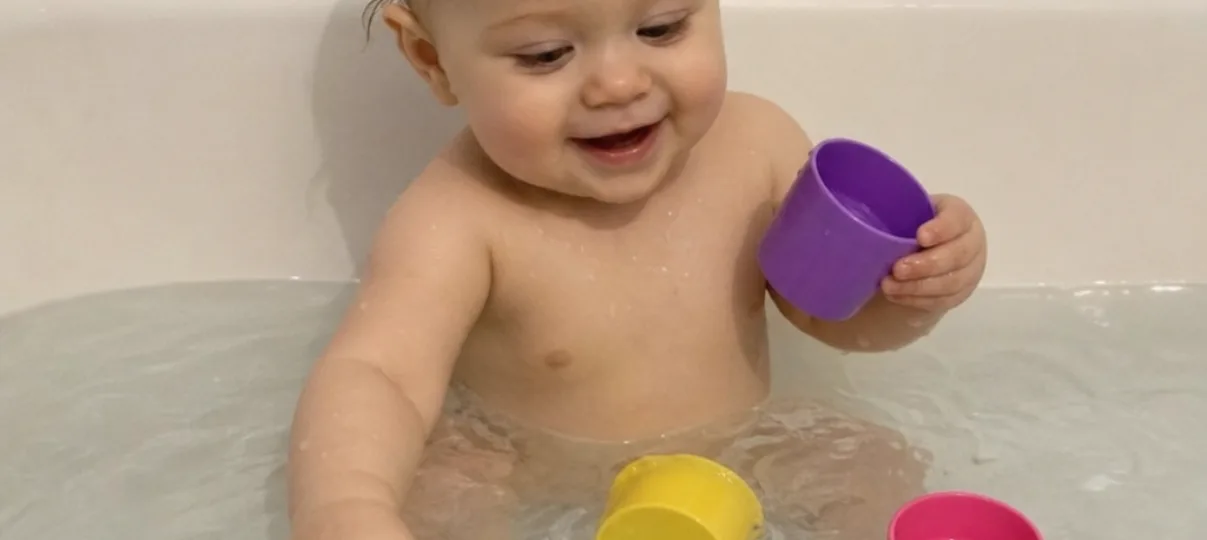
The best bath toys for babies at this stage are lightweight and easy to hold. Look for rounded shapes, larger pieces, and simple cause-and-effect play. Pouring cups, floating rings, and sealed animal shapes can help babies practice hand-eye coordination without overwhelming them.
Useful infant bath toys include:
- Stacking cups that pour, nest, and float.
- Fully sealed floating toys with no squeeze holes.
- Large silicone shapes that stick briefly to wet tub walls.
- waterproof books with bold images.
- Soft-bristled sensory brushes designed for baby care, if used gently.
These Baby Bath Toys help babies learn by repeating actions. They fill a cup, dump it, watch the water fall, and do it again. That loop may look simple, but it builds coordination, prediction, grip strength, and curiosity.
Toddler bath toys for active play
Toddlers want more control. They want to pour “tea,” wash toy animals, sort colors, create waterfalls, and make up stories. bath toys for toddlers should invite imagination without creating a mess of tiny pieces or impossible cleaning jobs.
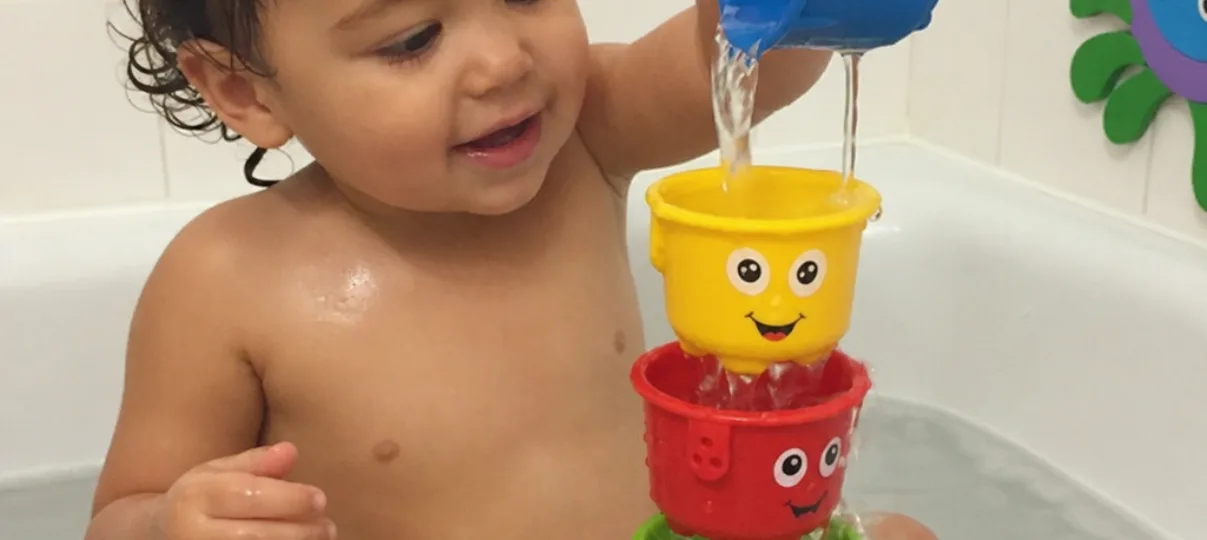
Great toddler bath toys often have a clear play pattern. A toddler can pour water through a spinner, stack cups from small to large, scoop floating pieces into a basket, or press large suction shapes onto the wall. The goal is not to turn every bath into a lesson, but educational bath toys can make learning feel natural.
Strong choices for toddlers include:
- Pouring cups with different drainage patterns.
- Large floating boats or animals that open for cleaning or are fully sealed.
- Suction wall pieces that create ramps, tracks, or waterfalls.
- Foam-free letter or number alternatives made from easier-drying materials.
- Bath crayons or washable wall markers, used only if they suit your tub surface and cleaning routine.
The best materials and designs for cleaner play
Material is not the only factor, but it matters. Hard, smooth surfaces are generally easier to rinse and dry than soft, porous, or textured surfaces. Silicone can also be a good option when the toy is simple, durable, and easy to inspect.
When comparing top bath toys, prioritize design features that reduce trapped moisture. Parents often focus on color, characters, or whether the toy lights up, but the underside, seams, holes, and openings tell you more about long-term hygiene.
Look for bath toys with:
- No water-entry holes, especially on toys meant to be squeezed.
- Fully sealed construction if the toy is hollow.
- Large openings if the toy is meant to fill with water, so you can clean inside.
- Dishwasher-safe labeling, when applicable, for easier routine cleaning.
- Simple shapes with fewer grooves where residue can collect.
- Large pieces that are easy to count before and after bath time.
- Durable materials that do not crack, peel, or trap grime at damaged edges.
Be cautious with soft rubber squirters, foam pieces that stay damp, and complicated toys with many hidden channels. Some families still use them, but they require more frequent inspection and replacement. If a toy smells musty, releases dark flakes, has sticky residue, or cannot be cleaned inside, it is usually time to let it go.
Fun bath toys that also support development
The best toys babies enjoy are often the simplest ones. The American Academy of Pediatrics has noted that simple toys can support imagination, caregiver interaction, language, problem-solving, and early spatial thinking. That idea fits bath play beautifully because water naturally invites experimentation.
You do not need a tub full of gadgets to create baby bath fun. A few carefully chosen toys can support several types of learning at once.
Sensory play
Bath time is full of sensory input: warm water, splashes, floating objects, sounds, bubbles, and changing textures. baby water toys such as cups, smooth floating animals, and soft waterproof books help children explore these sensations safely.
For babies, sensory play might be watching water drip from a cup. For toddlers, it may become a game of comparing fast and slow pours. Keep the language simple and descriptive: “full,” “empty,” “warm,” “splash,” “float,” “sink,” “more,” and “all done.”
Fine motor skills
Pouring, scooping, stacking, nesting, and pressing suction toys all support fine motor development. A baby who reaches for a floating cup is practicing coordination. A toddler who lines up bath toys along the tub edge is building control and planning.
Choose toys that offer a little challenge without frustration. If pieces are too slippery, too small, or too complicated, the child may lose interest or mouth them constantly. Larger, grippy pieces usually work better for early learners.
Language and pretend play
bath toys for toddlers are excellent for pretend play because the setting already creates a small world. A cup becomes soup, a boat rescues animals, and a washcloth becomes a blanket. This is where simple toddler bath toys beat noisy, overdesigned options.
Parents can add language without turning bath time into a quiz. Try phrases like, “The boat is going under the bridge,” or “The duck is hiding behind the cup.” These little comments build vocabulary, sequencing, and conversation.
Early STEM thinking
Water play is early science. Children test what floats, what sinks, what pours quickly, and what happens when a cup has holes. Bath time toys with spinners, funnels, cups, or ramps introduce cause and effect in a hands-on way.
A toddler does not need the word “physics” to learn from it. They only need a chance to repeat an action and notice a result. That is why educational bath toys work best when they are open-ended rather than overly scripted.
A practical bath toy checklist for parents
Before buying, saving, or replacing toys bath toys, run through this simple checklist. It works for infant bath toys, toddler bath toys, and mixed-age bathrooms.
- Age fit: Is the toy labeled for your child’s age and stage?
- Size safety: Is it too large to be a choking risk, especially for children under 3?
- No loose parts: Are there caps, buttons, batteries, magnets, or pieces that could detach?
- No hidden water: Can water get trapped where you cannot clean or dry it?
- Easy surface: Is the material smooth enough to rinse well?
- Drying plan: Do you have a place where the toy can air dry completely?
- Cleaning method: Does the toy have clear care instructions?
- Play value: Can your child use it in more than one way?
- Durability: Will it survive dropping, chewing, banging, and repeated washing?
- Clutter control: Does it add something new, or is it just another floating object?
This checklist is especially helpful when comparing the best bath toys for babies UK shoppers discuss online, U.S. options in local stores, or any global marketplace listing. Standards, labels, and product availability can vary by region, but the parent’s core decision stays the same: choose safe bath toys that are easy to supervise, clean, and store.
How should bath toys be cleaned and stored?
Bath toys should be rinsed after use, squeezed or shaken empty if they are designed to hold water, washed on a regular schedule, and dried in open air before storage. Toys that touch children’s mouths deserve extra attention; the CDC advises sanitizing items such as toys that come into contact with children’s mouths in early care settings, using appropriate cleaning and disinfecting procedures. For bleach solutions, CDC child-care guidance has included a weaker toy-safe recipe of 1 tablespoon bleach in 1 gallon of cool water, followed by safe handling and proper drying; always check the toy’s care label and never mix cleaning products.
For home use, the best routine is the one you can actually maintain. A complicated cleaning schedule will fall apart on busy nights. A simple rinse, drain, dry, and weekly wash rhythm is more realistic.
Try this routine:
- After every bath, rinse toys with clean water. This helps remove soap film and bath residue.
- Empty water immediately. If a toy holds water, drain it fully. If you cannot drain it fully, reconsider keeping it.
- Air dry before storing. Spread toys out instead of dropping them into a closed bin.
- Use breathable storage. Mesh bags, open baskets, and suction caddies allow airflow.
- Wash regularly. Follow the care label. Some hard plastic or silicone items may be dishwasher-safe on the top rack, but not all toys are.
- Inspect often. Check seams, holes, color changes, smell, cracks, and residue.
- Retire problem toys. If you see mold inside a sealed or hard-to-open toy, replacement is usually safer than trying to rescue it.
Storage is more important than many parents realize. A clean toy tossed into a damp pile may stay wet for hours. A toy spread out in an airy basket has a better chance of drying before the next bath.
Bath toy types worth considering
There is no single best bath toy for every child. The best bath toys for babies toddlers share a few traits: they invite repeat play, fit the child’s hands, and do not create hygiene headaches. Here are the main categories to consider.
Pouring and stacking cups
Cups are classic because they grow with the child. Babies grab and mouth them. Older infants bang them together and watch them float. Toddlers stack, nest, pour, compare, and pretend.
They are also among the easiest bath toys to clean because they are open. Choose cups with smooth interiors and drainage holes that are large enough to rinse. A set of cups can become a waterfall, a color-sorting game, a pretend kitchen, or a counting activity.
Floating toys
floating toys are wonderful for early reaching and tracking. For babies, choose larger sealed shapes without holes. For toddlers, floating boats, animals, or simple rescue sets can support storytelling.
The key is construction. If the toy is hollow, it should either be fully sealed or open wide enough to clean. Avoid floating toys with tiny squeeze holes unless you are prepared to inspect and replace them often.
Suction wall toys
Suction toys can make bath time feel fresh because they move play from the water surface to the wall. Toddlers may build ramps, press shapes into patterns, or pour water through channels. These can support problem-solving and coordination.
Check the suction cups regularly. Soap residue can build up around the edges, and small detachable suction pieces are not ideal for young children. Larger, one-piece designs are easier to manage.
Waterproof books
waterproof books are excellent Baby Bath Toys because they encourage shared attention. You can name animals, point to colors, make sounds, and create a calming routine before bedtime. They are especially useful when a child gets restless during hair washing.
Look for books that dry easily and do not have deep seams that hold water. Stand them upright after bath time so water can drain away.
Bath letters and numbers
Letters and numbers can be useful educational bath toys for toddlers, but they need careful handling. Traditional foam pieces often stick to tile and tub walls, which children love, but foam can stay damp and may wear down over time. If you use them, spread them out to dry and replace them when edges become rough or stained.
For an easier-care alternative, consider larger hard plastic or silicone letters designed for water play. The learning value comes from naming, sorting, matching, and storytelling, not from having the entire alphabet in the tub every night.
Light-up or musical toys
Some fun bath toys include lights or sounds. These can be exciting for toddlers, especially children who resist bath time. However, battery compartments, seals, and cracks need careful inspection.
Only use electronic bath toys exactly as labeled. Make sure the battery area is secure, and stop using the toy if the seal loosens or the toy behaves oddly. For many families, non-electronic toys are simpler, longer-lasting, and easier to clean.
Building a small, useful bath toy collection
A good bath toy collection does not need to be large. In fact, fewer toys are easier to clean, easier to dry, and easier for children to use creatively. Too many choices can turn bath time into clutter management.
A practical starter set might include:
- For babies: one rinse cup, one waterproof book, and two or three sealed floating toys.
- For older infants: nesting cups, a simple scoop, and large silicone wall shapes.
- For toddlers: pouring cups, a floating boat or animal set, and one suction water-play toy.
- For mixed ages: large open-ended toys with no tiny accessories.
This approach also helps you rotate toys. Keep a few in the bathroom and store the rest dry outside the tub area. Rotation makes old toys feel new again while giving you time to clean and inspect the unused set.
If you shop at Konicamart, a Baby Products store, think in terms of a balanced basket rather than a single novelty item: one toy for pouring, one for floating, one for language or pretend play, and one easy storage solution.
Common mistakes to avoid
Many bath toy problems come from normal busy-family habits. Nobody plans to grow mold in a rubber duck or lose tiny pieces under the vanity. It happens because bath time is often squeezed between dinner, bedtime, laundry, and exhaustion.
Avoid these common mistakes:
- Keeping every toy forever. Bath toys work hard. Replace damaged, smelly, cracked, or stained toys.
- Buying too many squirters. They are fun, but hidden water makes them harder to maintain.
- Using closed storage bins. A lidded container traps humidity and slows drying.
- Ignoring age labels. A toy that works for a preschooler may not be safe for a baby sibling.
- Forgetting supervision. Toys make bath time happier, but they never make water safe on their own.
- Letting batteries become an afterthought. Battery-operated toys need secure compartments and regular checks.
- Choosing novelty over cleanability. If you cannot tell how to clean it, it may not be worth the hassle.
The CPSC advises families to follow age guidance and safety information on toy packaging and to keep toys with small parts away from children younger than 3. That advice is especially important in the bathroom, where slippery hands and distracted moments can make small pieces harder to track.
Turning bath time into a calm learning routine
The best bath time toys for babies are not just distractions. Used well, they can help create a predictable rhythm that makes evenings smoother. A child who knows the bath routine may be more willing to transition from playtime to pajamas.
Try a simple sequence:
- Start with free splash time. Let your child explore one or two favorite toys.
- Add a small learning moment. Count cups, name colors, or compare full and empty.
- Use pretend play for washing. “Let’s wash the boat, then wash your arm.”
- Give a transition warning. “Two more pours, then toys go in the basket.”
- Make cleanup part of the game. Toddlers can help scoop toys into a drying basket.
This kind of routine works because it respects how children learn. They do not need long lessons. They need repetition, language, warmth, and a little room to experiment.
What to prioritize when shopping
When you are comparing top bath toys online or in store, product pages can start to blur together. Every item promises fun. Not every item is equally practical.
Prioritize these buying signals:
- Clear age range: Especially if you need bath toys for babies or a toy that a younger sibling may reach.
- Material information: Look for smooth, durable materials and avoid vague descriptions when possible.
- Cleaning instructions: A good product should tell you how to wash and dry it.
- Few or no crevices: Simpler shapes usually stay cleaner.
- No trapped-water design: Choose open or sealed toys over mystery interiors.
- Good grip: Babies and toddlers need shapes they can hold when wet.
- Play flexibility: Cups, boats, scoops, and wall pieces usually last longer than one-trick toys.
- Storage compatibility: If it cannot dry in your bathroom setup, it may become annoying quickly.
This is also where searches like “best bath toys for babies,” “best bath toys for babies and toddlers,” “bath toys for baby,” or even the awkward phrase “toys bath toys” should lead to the same practical conclusion: look beyond cute pictures and ask how the toy behaves after twenty wet evenings.
A cleaner, happier bath starts with fewer better toys
Bath toys can make washing easier, spark language, support coordination, and give children something joyful to anticipate. The safest and most useful options are age-appropriate, easy to grip, simple to clean, and able to dry completely between baths. Whether you are choosing infant bath toys, bath toys for toddlers, or a few newborn bath toys for gentle early routines, the goal is not to own more—it is to choose better.
For parents looking for the best bath toys for babies, safe bath toys, and practical baby products in one place, Konicamart can serve as a Baby Products store focused on everyday family needs. Start with a small set, inspect it often, store it where air can circulate, and let bath time stay what it should be: warm, playful, supervised, and simple.