
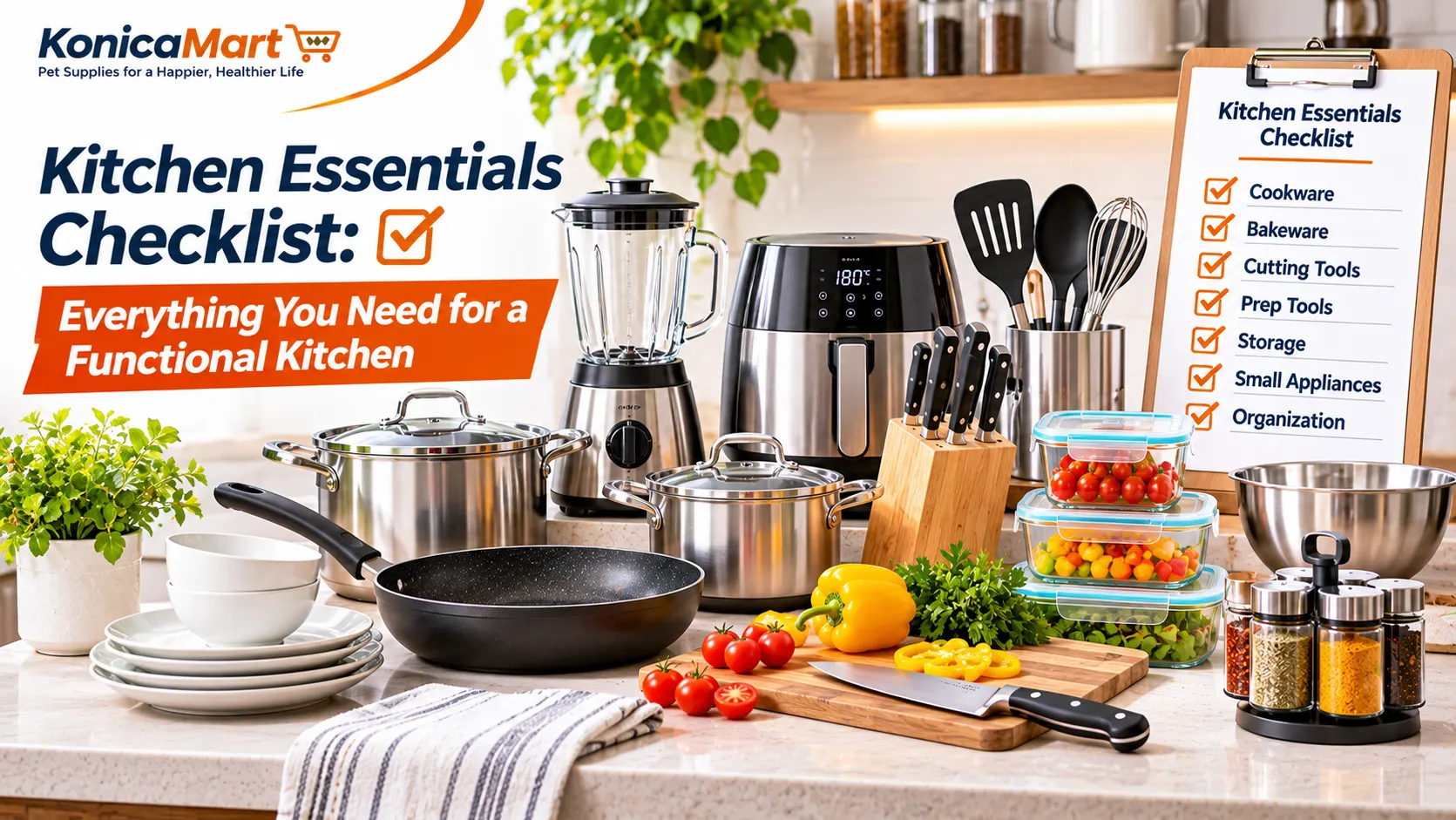
A useful kitchen essentials checklist covers the equipment you need to prepare meals, cook, serve, store food, and clean up—without filling every cupboard with gadgets. This guide separates everyday kitchen essentials from optional extras, with practical checklists for setting up your space. Use it to identify gaps, plan purchases, and build a kitchen around how you actually eat.
What do you need for a functional kitchen?
A functional kitchen needs reliable cookware, basic food preparation tools, essential cooking utensils, enough tableware for your household, food storage containers, and cleaning supplies. Start with equipment that supports your usual meals rather than buying every item in a matching set. Your available space, cooking habits, and washing-up routine should guide quantities.
Think through a typical dinner: chopping vegetables, boiling rice, cooking a main dish, serving, and packing leftovers. Each step should have a suitable tool and a clear place to work. If you rarely bake, baking accessories can wait; if you pack lunch daily, storage deserves early attention.
Treat this basic kitchen essentials checklist as a starting point, not a requirement to buy everything immediately. The goal is to complete familiar meals comfortably, then add equipment when a specific need appears.
Build a kitchen inventory list before shopping
Before choosing kitchen supplies, check what you already own. Include items packed in moving boxes, shared household equipment, and appliances supplied with your home. Test whether lids fit, handles feel secure, and containers still have matching tops.
Create a kitchen inventory list with these columns:
| Item or category | Current condition | Action |
| Knives and cutting boards | Usable, damaged, or missing | Keep or replace |
| Pots, pans, and bakeware | Suitable for planned meals | Keep or add selectively |
| Plates, glasses, and cutlery | Enough for household use | Fill quantity gaps |
| Containers and organizers | Matching lids and suitable sizes | Keep, sort, or replace |
| Appliances and cleaning supplies | Working or needing attention | Test, replenish, or remove |
Mark each purchase as needed now, useful later, or optional. Whether Konicamart is on your shopping list or you are comparing other options, use those priorities to keep browsing focused.
Food preparation tools and utensils worth starting with
Build your cooking essentials list around tasks: cutting, measuring, mixing, opening, draining, and serving. Choose handles that feel comfortable and tools you can clean and store easily. A small selection of cooking utensils for home is a sensible starting point; leave specialized pieces for recipes you actually make.
Cutting and preparation basics
- [ ] Chef’s knife: Choose a size and weight you can control comfortably for everyday chopping.
- [ ] Paring knife: Add one for smaller jobs such as trimming fruit or removing blemishes.
- [ ] Serrated knife: Include one if you regularly slice bread or similar foods.
- [ ] Cutting boards: Plan separate boards for raw meat, poultry, and seafood versus produce and ready-to-eat foods, as recommended by food-safety guidance.
- [ ] Vegetable peeler and grater: Start with these if peeled vegetables, grated cheese, or shredded produce feature in your meals.
- [ ] Can opener: Include a manual opener if canned ingredients are part of your pantry.
Mixing, measuring, and handling food
- [ ] Mixing bowls: Pick sizes for your usual portions and check their cupboard fit.
- [ ] Measuring cups and spoons: Include liquid and dry measuring tools when your recipes call for them.
- [ ] Colander or sieve: Choose according to whether you mainly drain pasta, rinse produce, or strain smaller ingredients.
- [ ] Spatula, spoon, tongs, and whisk: Use this as your initial set of essential cooking utensils.
- [ ] Food thermometer: Use it to check safe internal cooking temperatures rather than relying on appearance alone. (foodsafety.gov)
Before buying kitchen utensils, check their care instructions and suitability for your cookware. Keep duplicates only when your cooking routine genuinely needs them.
Cookware, bakeware, and serving essentials
For an initial functional kitchen setup, consider a frying pan, a saucepan with a lid, and a larger pot. Add a rimmed baking sheet and an oven-safe dish if oven cooking is part of your routine. This is a suggested starting collection, not a reason to replace useful pieces you already own.
Choose sizes by imagining actual portions. A saucepan should accommodate your usual grains or sauces, while a larger pot should suit the soups or pasta you expect to make. Check that each piece fits your sink, cupboards, burners, and oven where relevant.
For an induction cooktop, verify cookware compatibility before purchasing. ENERGY STAR explains that induction requires compatible magnetic cookware and suggests checking whether a magnet sticks to the base. (energystar.gov)
For serving, start with:
- [ ] Dinner plates and bowls for regular household meals.
- [ ] Forks, knives, and spoons for each person.
- [ ] Drinking glasses and mugs suited to daily habits.
- [ ] A serving spoon and an appropriate dish or bowl for shared meals.
- [ ] Oven mitts and trivets for handling and setting down hot cookware.
Choose quantities around your washing-up schedule. If you run the dishwasher less frequently, allow for dishes used between cycles rather than buying an arbitrary matching set.
Which kitchen appliances are actually essential?
Your must-have kitchen appliances depend on what the home already provides and how you prepare food. Confirm the available refrigeration and cooking equipment first, then choose countertop appliances for recurring tasks. A microwave, kettle, toaster, or blender belongs on your list only when it supports something you regularly do.
Use these prompts before adding appliances:
| Appliance | Consider it when | Check before buying |
| Microwave | Reheating is part of your routine | Available space and suitable dishes |
| Electric kettle | You regularly prepare hot drinks | Placement and care instructions |
| Toaster | Toast is a frequent breakfast | Storage space and preferred bread size |
| Blender | You often make blended drinks or soups | Capacity and cleaning requirements |
| Rice cooker | Rice is a regular meal component | Portion needs and storage location |
| Food processor or mixer | Your recipes involve repeated processing or mixing | Whether existing kitchen tools already meet the need |
Wait on specialized appliances until you can name the meals they will help you make. Before ordering, measure the intended spot and review the manufacturer’s placement, operating, and cleaning instructions. Include space to open lids and remove bowls, not just the appliance footprint.
Kitchen storage essentials that fit your space
Plan kitchen storage essentials around the ingredients, leftovers, and lunch portions you actually keep. Start with a manageable selection of food storage containers, then add sizes as your routine becomes clear. Check whether each container is labeled for its intended freezer, microwave, dishwasher, or other use.
For cooked leftovers, include shallow containers. Food-safety guidance recommends dividing leftovers into shallow containers and refrigerating them promptly so they can cool quickly. (foodsafety.gov)
Consider these kitchen organization products only after measuring the spaces they will occupy:
- Drawer dividers: Assign separate areas for cutlery, measuring tools, and preparation utensils.
- Shelf risers: Consider them where your cupboard height leaves space above shorter items.
- Pan and lid organizers: Use them if stacked cookware is awkward to retrieve.
- Pantry bins: Group related ingredients, such as breakfast supplies or baking ingredients.
- Labels: Mark contents and dates where useful, especially when packaging has been discarded.
Arrange kitchen items for everyday use near their tasks: preparation tools beside your work surface, mugs near your drink-making area, and containers near where you pack leftovers. Reserve less accessible cupboards for occasional-use kitchen accessories.
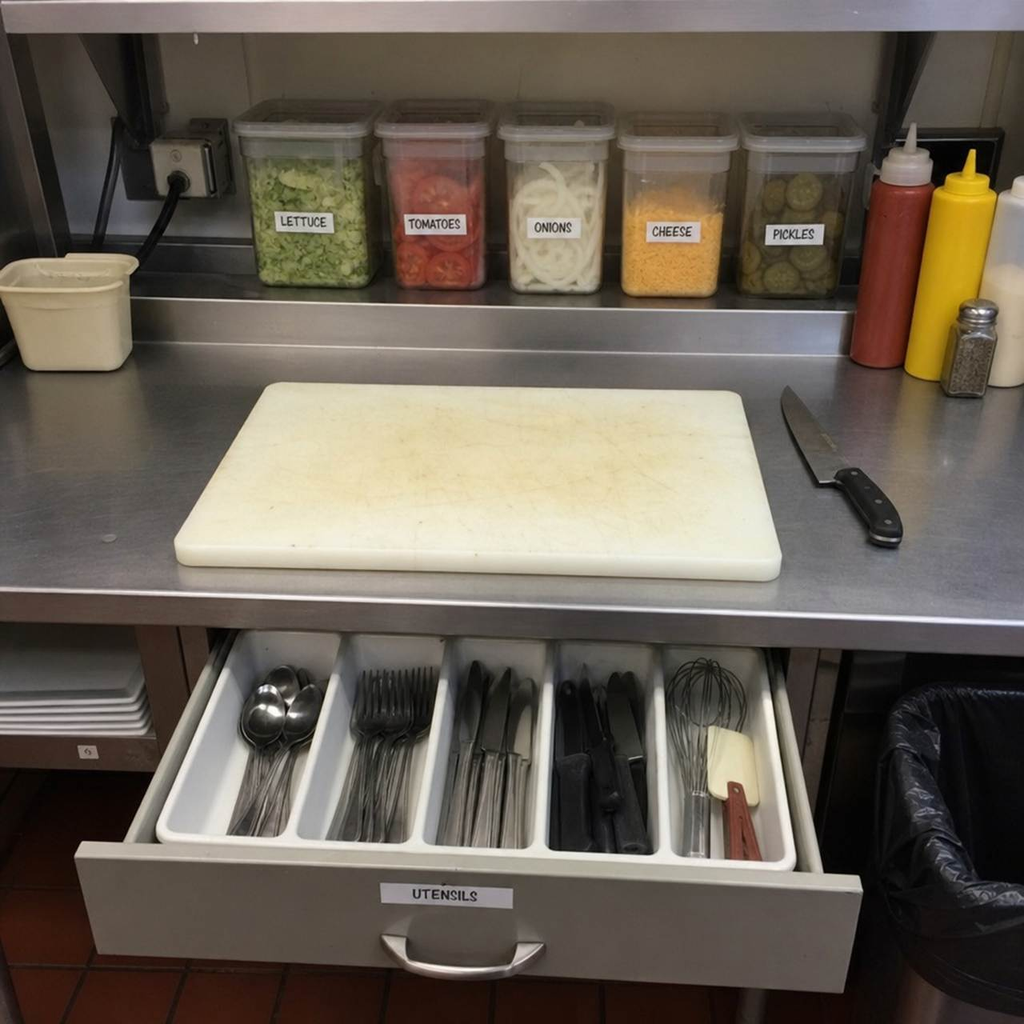
Avoid buying an organizer simply because a cupboard looks untidy. First remove unused items, decide what belongs there, and measure the remaining collection. Then choose an organizer to solve a specific access or storage problem.
Kitchen cleaning supplies belong on the main checklist
Include kitchen cleaning supplies in your initial budget, not as an afterthought. Plan how you will wash dishes, wipe surfaces, dry equipment, and handle rubbish before your first cooking session. Choose products according to the surfaces and appliances you own.
Your cleaning checklist can include:
- [ ] Dish soap, a dish brush, and suitable non-scratch cleaning tools.
- [ ] Dishwasher detergent if you have a dishwasher.
- [ ] Clean dish towels and separate surface-cleaning cloths.
- [ ] A drying rack or mat if you hand-wash items.
- [ ] Surface cleaner appropriate for your counters.
- [ ] A rubbish bin, liners, and recycling containers.
- [ ] A broom, dustpan, and suitable floor-cleaning equipment.
Follow product labels for use and storage. Never mix bleach or disinfectants with other cleaners, as CDC guidance warns. (cdc.gov) Keep a routine: clear the preparation area, wash used equipment, wipe surfaces, and return dry items to their places.
How should the checklist change for your household?
Adapt your checklist for kitchen essentials to the people using the space, the meals they prepare, and the storage available. A first apartment usually calls for a restrained starting collection, while a larger household may need more serving pieces and meal-sized cookware. Guest accommodation requires a separate review from the visitor’s perspective.
First apartments and new homes
For a first apartment kitchen essentials checklist, prioritize what lets you prepare and eat a few familiar meals immediately. Start with basic kitchen equipment, tableware, food storage, and cleaning supplies. Borrow occasional-use equipment where practical, and delay purchases that have no clear job.
Use the same approach for kitchen essentials for a new home, but check what comes with the property before shopping. Measure drawers and cupboards after moving in. Your first kitchen essentials checklist should reflect the space you have, not the kitchen you imagined while packing.
Guest and short-term rental kitchens
An Airbnb kitchen essentials checklist should reflect the cooking facilities and amenities described in the listing. Walk through preparing breakfast and a simple dinner as a guest would. Check that the equipment supports those tasks and that everyday items are easy to locate.
Include an inventory for turnover checks, straightforward appliance instructions, and a place to report missing or damaged items. Choose quantities based on the number of guests you intend to accommodate. Do not assume that a homeowner’s collection automatically makes an intuitive guest kitchen.
Turn the checklist into a practical shopping plan
Review the unchecked items and group purchases by the meals they enable. Buy essential kitchen items for immediate use first, then add convenience tools after you have cooked in the space. Keep a note of repeated frustrations—a missing lid, an awkward serving tool, or insufficient lunch containers—rather than buying gadgets speculatively.
If you want a kitchen essentials checklist PDF, copy the relevant checklists into a document and export it as a PDF. Add columns for quantity, cupboard location, and purchase priority. Revisit it after your first few weeks of cooking.
The best must-have kitchen items are the ones that earn their space. Start with dependable cooking essentials, keep your setup easy to clean, and let everyday meals reveal what belongs next.