
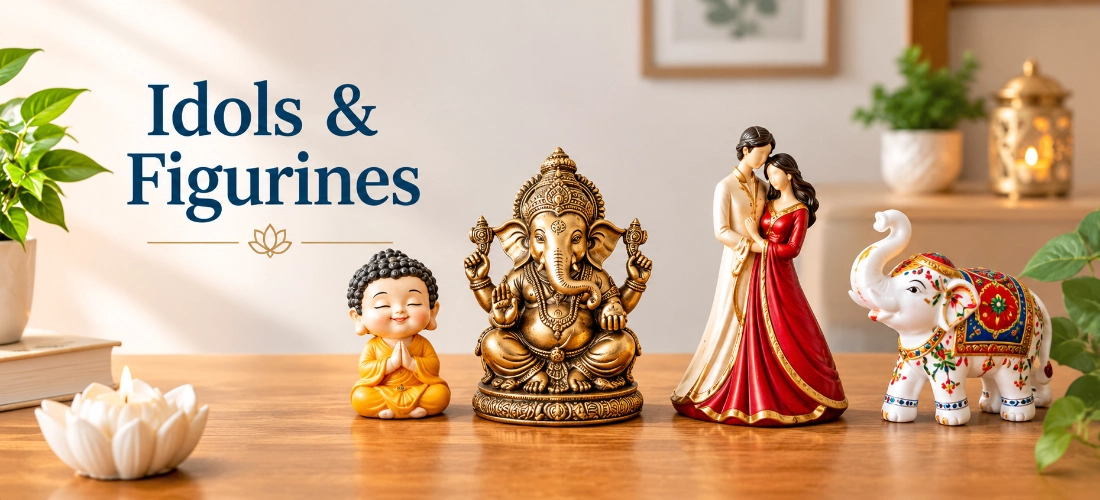
Idols and figurines bring beauty, symbolism, and personal meaning into a space. Whether you are choosing Shiva, Buddha, Ganesha, Lakshmi, or another god statue for your home, prayer area, meditation corner, or display shelf, the right piece should feel intentional rather than purely decorative. This guide explains how to choose, style, and care for religious figurines, resin statues, handmade idols, and collectible figurines with respect and confidence.
What makes an idol or figurine meaningful beyond decoration?
An idol or figurine becomes meaningful when it connects visual beauty with a purpose, memory, belief, or feeling. A Buddha figure may support a calmer meditation space, a Ganesha idol may symbolize wisdom and new beginnings, and a Lakshmi statue may represent abundance and auspiciousness. Decorative statues can still be beautiful on their own, but religious statues often carry an added layer of reverence, making placement, condition, and intention especially important.
That does not mean every piece must be large, expensive, or ornate. Miniature idols, simple resin statues, art figurines, and unique collectibles can all create a strong presence when chosen thoughtfully. The key is to understand what the figure represents, where it will live, and how it fits the mood of the room.
The lasting appeal of sacred and artistic figurines
Religious figurines have remained popular because they serve more than one purpose. They can support devotion, mark a personal milestone, create a peaceful atmosphere, or complete an interior design theme. In many homes, an idol collection grows slowly over time, with each piece linked to a festival, travel memory, family tradition, or meaningful gift.
There is also an artistic side to these pieces. Art figurines highlight posture, expression, texture, and finishing detail. A serene Buddha face, the dancing form of Shiva, or the graceful posture of Lakshmi can add visual depth to a room even before the symbolism is considered. This is why many people display religious statues not only in prayer rooms but also in living rooms, libraries, offices, and entryways.
Collectible figurines can also appeal to people who enjoy craftsmanship and variety. Some prefer a coordinated set, while others mix vintage figurines, modern resin statues, handmade idols, and small travel finds. The result is a personal display that feels collected, not copied.
Popular figures and what they often represent
Choosing a god statue becomes easier when you know the broad meaning associated with each figure. These meanings can vary by tradition, family practice, and personal belief, so it is always best to approach them with respect rather than treating them as simple design themes.
Shiva statues
Shiva is often associated with transformation, stillness, meditation, and cosmic energy. A Shiva statue may show a seated meditative form, a dancing Nataraja form, or a symbolic representation connected with spiritual discipline. These pieces often work well in quiet areas where reflection, focus, or contemplation is encouraged.
A detailed Shiva figurine can become the visual center of a meditation corner or home altar. In a broader decor setting, it pairs well with natural materials, soft lighting, and uncluttered surroundings. Because the figure carries strong spiritual meaning, give it enough visual space rather than crowding it among unrelated decor.
Buddha figurines
Buddha figurines are commonly chosen for calm, mindfulness, and inner balance. A seated Buddha can soften the feel of a room, while a small miniature idol can bring a quiet accent to a desk, shelf, or reading nook. Many people choose Buddha decorative statues for meditation spaces because the expression and posture often create a sense of stillness.
When styling Buddha religious figurines, simplicity is usually effective. Place the piece where it can be seen clearly, with enough surrounding space for the figure to feel peaceful. Avoid treating it as a random filler object, especially if the item is used in a spiritual or meditative setting.
Ganesha idols
Ganesha is widely associated with wisdom, learning, prosperity, and the removal of obstacles. A Ganesha idol is often placed near entrances, study areas, workspaces, or prayer spaces because of its connection with beginnings and good fortune. Ganesha figurines are also popular as gifts for housewarmings, new ventures, and festive occasions.
Because Ganesha appears in many artistic styles, you can find everything from small collectible figurines to larger religious statues with detailed ornamentation. Resin statues are especially common for decorative use because they allow fine detailing and a variety of finishes. Handmade idols may offer a more personal, crafted feel, with slight variations that make each piece distinct.
Lakshmi statues
Lakshmi is associated with prosperity, beauty, grace, and abundance. A Lakshmi statue is often selected for prayer areas, festival displays, and spaces connected with gratitude and well-being. The figure is frequently shown seated or standing on a lotus, sometimes with symbolic details that reinforce ideas of blessing and abundance.
Lakshmi religious statues are often chosen in warm metallic finishes, bright colors, or ornate detailing. If you prefer a subtle look, a smaller resin or handmade version can still feel elegant without overwhelming the room. What matters most is that the piece feels respectful and thoughtfully placed.
Choosing the right material for your space
Material affects appearance, durability, weight, price range, and care. While exact quality depends on the maker and finish, understanding common material types can help you choose pieces that match your lifestyle.
Resin statues are popular because they can capture detailed expressions, jewelry, clothing folds, and symbolic elements. They are usually easier to move than stone or metal pieces and can be finished to resemble bronze, wood, marble, or painted ceramic. Resin works well for shelves, office displays, home altars, and decorative arrangements where detail matters.
Handmade idols often appeal to people who value craft and individuality. These may show subtle differences in shape, paint, texture, or finish, which can make them feel more personal. If you are building idol collections with emotional value, handmade pieces can add warmth and character.
Metal or stone-look decorative statues can create a more traditional or substantial impression. They often suit formal prayer spaces, entry tables, and statement displays. However, heavier pieces need stable surfaces and careful handling.
Miniature idols are ideal when space is limited. They can be placed on compact shelves, small altars, office desks, or gift boxes. Their size does not reduce their meaning; in many cases, a small piece placed with intention feels more powerful than a large object placed carelessly.
How do you choose religious figurines for a home, office, or gift?
Choose religious figurines by balancing meaning, size, material, placement, and the recipient’s beliefs or taste. For your own space, start with the feeling you want to create: calm, devotion, welcome, focus, celebration, or beauty. For a gift, choose a figure and style that the recipient will understand and appreciate, especially when selecting religious statues with sacred significance.
A practical checklist can help narrow the options:
- Purpose: Decide whether the piece is for worship, meditation, decor, collecting, gifting, or seasonal display.
- Figure: Choose Shiva, Buddha, Ganesha, Lakshmi, or another god statue based on meaning and personal relevance.
- Size: Measure the shelf, altar, table, or niche before buying, especially for larger decorative statues.
- Material: Consider resin statues for detail and versatility, handmade idols for craft appeal, and miniature idols for compact spaces.
- Style: Match the finish to the room, such as antique, colorful, minimalist, metallic, stone-look, or traditional.
- Care needs: Think about dusting, handling, sunlight exposure, and whether the surface finish is delicate.
- Respectful placement: Avoid spots where the idol may be knocked over, ignored, or treated casually.
When buying collectible figurines or unique collectibles, also consider how the piece will fit into your existing collection. A new idol should add variety without creating visual clutter. If every shelf is already full, it may be better to rotate pieces seasonally instead of crowding them together.
Styling idols and figurines with intention
Good styling gives each piece room to breathe. Even a small figurine can lose impact if it is surrounded by too many unrelated objects. Start by choosing one primary focal point, then build the display around it with supportive elements such as a clean tray, small lamp, flowers, books, incense holder, or natural textures.
A home altar may use symmetry, candles, and fabric to create a devotional setting. A living room display may use a single Buddha or Ganesha figure as a calm accent among books and plants. An office shelf may feature a small god statue as a reminder of focus, wisdom, or new beginnings.
Try these simple styling ideas:
- Create a dedicated surface. Use a shelf, console, wall niche, or tabletop where the figure will not feel like an afterthought.
- Use height variation. Pair larger religious statues with smaller miniature idols or low decorative objects for balance.
- Keep the background simple. A plain wall, wood panel, or neutral fabric helps the figure stand out.
- Add gentle lighting. Soft light can highlight texture and expression without making the space feel harsh.
- Edit regularly. Remove items that do not support the display’s mood or meaning.
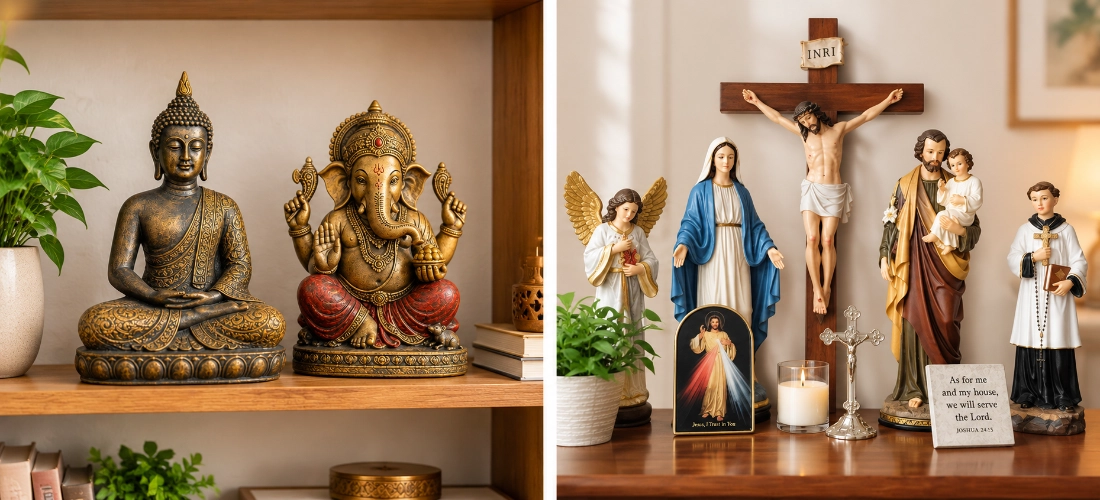
Building idol collections without clutter
Idol collections are most compelling when they feel curated. Instead of buying every attractive piece you see, choose a focus. You might collect Ganesha figurines in different art styles, Buddha figures in calming neutral tones, vintage figurines with aged finishes, or religious figurines from meaningful places and occasions.
A focused collection helps each piece tell a clearer story. For example, a group of miniature idols can look beautiful when arranged by height and finish. A collection of art figurines can feel gallery-like when displayed with space between each object. A mix of vintage figurines and newer resin statues can also work if you connect them through color, theme, or material.
To keep a collection manageable, follow a simple rule: if a new piece comes in, decide where it belongs before you buy it. This prevents overcrowding and helps you choose items that genuinely improve the display. You can also rotate pieces for festivals, seasons, or special family occasions.
Caring for resin statues, handmade idols, and collectible pieces
Care begins with gentle handling. Many religious products include fine details such as hands, crowns, instruments, lotus petals, ornaments, and facial features. These details can collect dust or become vulnerable if the item is dropped, scrubbed, or stored carelessly.
Use a soft dry cloth or gentle brush for regular dusting. Avoid harsh cleaners unless the maker specifically says they are safe for the material and finish. Keep painted items away from prolonged direct sunlight when possible, as strong light may affect color over time. If the piece is used in a prayer setting, be mindful of oil, smoke, water, flowers, and powders that may touch the surface.
For storage, wrap fragile figurines separately and avoid stacking them. Label seasonal pieces so they can be found easily for festivals or special displays. If you own unique collectibles or sentimental handmade idols, photograph them before storage so you remember their condition and arrangement.
Respectful placement matters
Because religious statues can carry sacred meaning, placement should be thoughtful. A clean, stable, elevated surface is usually better than a crowded low-traffic corner or a surface where items are tossed casually. Even when a piece is purchased as decor, it is considerate to treat the figure with care.
Avoid placing religious figurines where they may be easily damaged, covered by clutter, or exposed to spills. In shared homes or offices, consider whether the placement is appropriate for everyone who uses the space. If you are gifting a religious item, make sure it aligns with the recipient’s beliefs, practices, and comfort level.
Respect also shows in how you describe and use the piece. An idol can be beautiful, collectible, and decorative while still being connected to living traditions. That balance is what gives many religious figurines their enduring appeal.
Small details that make a figurine feel special
The most memorable figurines often have details that reward a closer look. This may include a calm facial expression, balanced proportions, fine carving, hand-painted accents, antique-style finishing, or a pose that captures movement and emotion. With resin statues, look for clean edges, stable bases, and well-defined details. With handmade idols, appreciate the natural variations that show the touch of the maker.
Color and finish also shape the mood. Gold and bronze tones can feel festive and traditional. White, stone, or wood-look finishes feel calmer and more minimal. Bright painted religious products can bring energy to festival decor, while muted vintage figurines may blend beautifully into classic interiors.
Before choosing, imagine the piece in its final location. Will it stand out or disappear? Will it feel calm, joyful, formal, or ornate? The best choice is not always the most elaborate one; it is the one that belongs naturally in your space.
A thoughtful approach to buying religious products
Buying idols and figurines is easier when you combine taste with intention. Look for pieces that feel meaningful, suit your space, and can be cared for properly. Whether you prefer decorative statues, collectible figurines, handmade idols, miniature idols, or a statement god statue, choose items that you will value beyond the moment of purchase.
If you are starting fresh, begin with one figure that matters most to you. Build slowly, leave room around each piece, and let your collection develop with your life. A carefully chosen idol or figurine can bring beauty to a room, but more importantly, it can become a quiet daily reminder of peace, wisdom, gratitude, or devotion.